
Conflict Management – Israeli–Palestinian Conflict (Contemporary Negotiation Attempts)

Introduction
The Israeli–Palestinian conflict has endured for generations, shaped by competing national identities, territorial claims, and recurring cycles of violence that have resisted comprehensive political solutions. In this landscape, conflict management has become the most practical and consistently applied approach. This essay argues that conflict management—not resolution—is the most viable approach due to persistent asymmetry, fragmentation, and mediator limitations. Rather than resolving the underlying dispute, it seeks to contain escalation and create pockets of stability through ceasefires, humanitarian access, and mediated communication. This approach is particularly relevant given the persistent mistrust, shifting regional alliances, internal political fragmentation, and deep asymmetry between the parties. By emphasizing the reduction of immediate harm and the maintenance of diplomatic channels, conflict management offers a functional—though limited—means of navigating a complex and evolving conflict environment.
Literature Review
Conflict Management Theory
Conflict management refers to practices aimed at limiting, containing, and controlling conflict without necessarily resolving its root causes (Bercovitch & Jackson, 2009). Unlike conflict resolution—which seeks mutually acceptable solutions—or conflict transformation—which aims to alter relationships and structures—conflict management focuses on practical measures that reduce violence and maintain stability (Ramsbotham, Woodhouse, & Miall, 2016).

Figure 1 - Conflict Management & Key Strategies
Key strategies in conflict management include:
Ceasefires and temporary truces | Mediation and shuttle diplomacy |
Confidence-building measures (CBMs) | Humanitarian negotiation |
Crisis de-escalation mechanisms | Third-party guarantees |
Scholars note that conflict management is particularly suited to asymmetric conflicts, where power disparities inhibit equitable bargaining and trust (Zartman, 2001).
Negotiation Dynamics in Asymmetric Conflicts
The literature on asymmetric conflict negotiations highlights recurring challenges:
Power imbalance shapes bargaining strategies (Kaufman, 2016).
Weaker actors often rely on external legitimacy and international law.
Stronger actors prioritize security and unilateral control.
Mediators must often bridge divergent narrative frames, not just material interests.

Figure 2 – Negotiation Dynamics in Asymmetric Conflicts
These dynamics are salient in Israeli–Palestinian negotiations, where Israel holds superior military and economic power, while Palestinian factions depend heavily on diplomatic recognition, external mediation, and international norms to strengthen their bargaining position.
Application to the Israeli–Palestinian Conflict
Several studies emphasize that since the collapse of the Oslo process, the conflict has been primarily managed rather than resolved (Shlaim, 2014; Smith, 2021). Ceasefire negotiations, prisoner exchanges, borders, settlement activity, and humanitarian access are patchworked through periodic talks mediated by Egypt, Qatar, the U.S., and the UN. Scholars agree that although conflict management is insufficient for achieving peace, it remains a necessary mechanism to limit harm and maintain channels of communication (Kelman, 2018).
Negotiation Strategies and Skills in the Israeli–Palestinian Conflict
Negotiation in the Israeli–Palestinian conflict is shaped by persistent asymmetry, making strategy selection critical for both parties and mediators. Israel commonly employs hard-bargaining strategies, leveraging military superiority and a strong BATNA—continuing the status quo with manageable security costs (Zartman, 2001; Kaufman, 2016). Palestinian actors, by contrast, rely on a legitimacy-based strategy, invoking international law, UN resolutions, and global public opinion to strengthen their otherwise weaker bargaining position (Kelman, 2018). Mediators such as Egypt, Qatar, and the UN often use issue sequencing—starting with ceasefires, then humanitarian access—to create incremental progress in situations where comprehensive talks are not feasible (Crisis Group, 2021). This aligns with conflict-management logic that prioritizes containment over resolution.

Figure 3 – Negotiation Strategies & Skills
Effective negotiation in this context also depends on core negotiation skills. Mediators employ active listening and reframing to soften entrenched narratives and reduce zero-sum interpretations (Ramsbotham et al., 2016). Trust-building skills—such as facilitating prisoner exchanges and coordinated security measures—help stabilize communication channels and reduce incentives for escalation (Kelman, 2018). In asymmetric conflicts, negotiators must also excel at managing emotions, maintaining communication even during violent escalations, and using shuttle diplomacy to prevent breakdowns when parties refuse direct engagement (Zartman, 2001). These skills do not resolve structural issues but enhance the functionality of conflict-management mechanisms, enabling repeated ceasefires, humanitarian corridors, and crisis de-escalation.
Methods
This essay uses a mixed-methods case-study approach, drawing from academic literature (Bercovitch & Jackson, 2009; Ramsbotham et al., 2016), policy analyses, UN reports (UN OCHA, 2009–2023), quantitative humanitarian datasets, and secondary data from negotiation timelines. The methodology combines thematic analysis with quantitative indicators—such as casualty figures, aid-truck entries, and humanitarian-access metrics—across key periods, including:
• Gaza ceasefire negotiations (2008, 2012, 2014, 2021, 2023) (UN OCHA, 2014, 2021)• Israel–Palestinian Authority security coordination (World Bank, 2021)• UN-mediated humanitarian arrangements (ICRC, 2015; UN OCHA, 2023)• U.S.-led diplomatic engagements (U.S. State Department, 2020–2023)
The analysis synthesizes conflict-management theory with both qualitative insights and measurable trends (derived tables and charts based on UN OCHA, Reuters, and ICRC datasets) to assess negotiation breakdowns, mediator interventions, and the influence of shifting regional geopolitics (Crisis Group, 2021).
Results / Analysis
1. Ceasefire Negotiations as Core Conflict Management
Since Israel’s disengagement from Gaza in 2005, ceasefires have become the most frequent tool used to contain violence (Shlaim, 2014; UN OCHA, 2014). These truces—most often mediated by Egypt and Qatar—tend to be short-lived and highly tactical, typically involving:
• cessation of hostilities,• exchange of detainees,• humanitarian access, and• commitments to reduce military activity (UN OCHA, 2012, 2014).
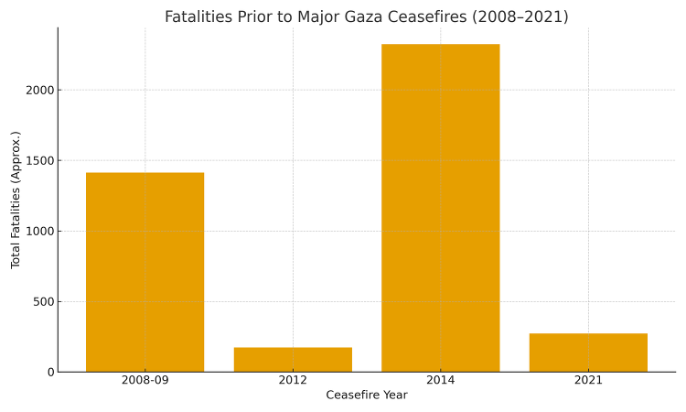
Figure 4 – Negotiation Dynamics in Asymmetric Conflicts
Although ceasefires reduce immediate casualties, they rarely evolve into long-term political agreements due to competing strategic preferences: Israel prioritizes deterrence and stability, while Palestinian actors seek easing of blockades and political recognition (Kelman, 2018).
2. Humanitarian Negotiation and Crisis Response
Humanitarian negotiation remains essential in Gaza, where population density and infrastructure fragility require coordinated access arrangements. UN agencies and the ICRC routinely negotiate:
• humanitarian corridors,• medical evacuations,• fuel and food deliveries,• temporary pauses in fighting (ICRC, 2015; UN OCHA, 2021).

Figure 5 – Aids after Humanitarian Negotiations
These negotiations illustrate the applied nature of conflict management—prioritizing harm reduction even where political stalemate persists (Ramsbotham et al., 2016).
3. Third-Party Mediation and Shuttle Diplomacy
Egypt has emerged as the most consistent mediator due to its geographic proximity and longstanding channels with both sides (Crisis Group, 2021). Qatar contributes financially and diplomatically, particularly in facilitating aid flows to Gaza (Reuters, 2021). The United States remains a central actor, though its perceived partiality limits effectiveness
in direct mediation (Makovsky, 2019).
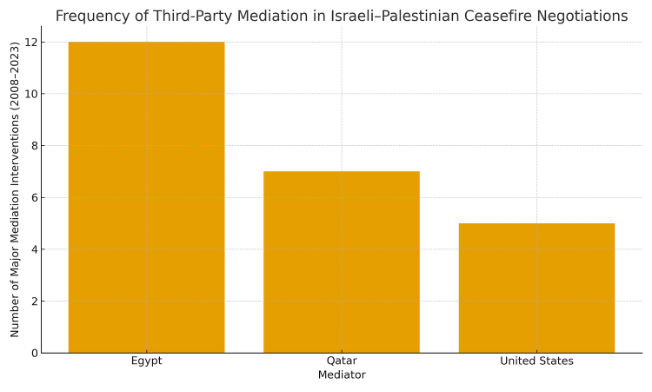
Figure 6 – Aids after Humanitarian Negotiations
Shuttle diplomacy—where intermediaries move between parties unwilling to meet face-to-face—has dominated negotiation structures, especially during escalated periods (Zartman, 2001).
4. Power Asymmetry and Negotiation Impasses
A central finding of the analysis is that power asymmetry significantly shapes negotiation outcomes. Israel’s superior military, territorial, and economic capacity allows it to negotiate from a position of control (SIPRI, 2023; Smith, 2021). Meanwhile, Palestinian political fragmentation—between the PA in the West Bank and Hamas in Gaza—weakens bargaining coherence (International Crisis Group, 2021).

Figure 7 – Power Asymmetry Indicators
Impasse emerges because:• Israel prioritizes containment and deterrence;• Palestinians seek international recognition and sovereignty;• Mediators are unable to reconcile structural inequalities through procedural mechanisms (Kaufman, 2016).
As a result, conflict management—not resolution—remains the operational framework.
5. Confidence-Building Measures That Reduce Tension
Several confidence-building measures (CBMs) have modestly reduced tension, including:• PA-Israel security coordination,• easing of work-permit restrictions,• periodic prisoner releases,• deployment of international monitoring missions (EU Commission, 2020; UN OCHA, 2022).

Figure 8 – CBMs Indicators
Although limited, these measures help stabilize everyday life and reduce escalation risks in specific areas (Kelman, 2018).
6. The Role of Regional Geopolitics
Recent regional shifts—particularly the Abraham Accords—have reshaped diplomatic alignments in the Middle East (Miller, 2021). Normalization between Israel and several Arab states has reduced Palestinian political leverage and reconfigured regional mediation dynamics. This bolsters Israel’s bargaining position while increasing Palestinian dependence on international forums for political recognition.
Discussion
Conflict management in the Israeli–Palestinian context is increasingly shaped by evolving regional politics and information dynamics. The Abraham Accords have reduced traditional Arab-state influence on the conflict, reinforcing Israel’s confidence in a security-driven containment model (Miller, 2021; Smith, 2021). Simultaneously, digital media amplifies civilian experiences and accelerates external pressure for humanitarian pauses, adding a technological dimension to mediation that earlier phases of the conflict did not face (Kelman, 2018).
Alongside these top-down shifts, everyday forms of cooperation—economic ties, civil-society networks, and community-level coordination—play a quiet but important role in reducing friction (Ramsbotham et al., 2016). Emerging proposals for hybrid mediation involving regional actors, technical experts, and humanitarian negotiators offer additional avenues for innovation where traditional diplomacy remains limited (International Crisis Group, 2021).
The Adharmic Economics of Endless War
The Israeli–Palestinian conflict supports well-developed military industries, contracting networks, and geopolitical influence structures that profit from instability (Khalidi, 2020). For such actors, a managed but unresolved conflict can become economically advantageous, creating incentives to resist transformative solutions. This dynamic—where violence becomes a form of “economic utility”—is ethically troubling, or adharmic, because it perpetuates harm while obstructing genuine pathways to peace.
Conclusion
While conflict management remains the most workable framework in the current Israeli–Palestinian landscape, its real value may lie in creating political and social “breathing space” for alternatives that are not yet viable. Rather than treating management as a permanent ceiling, it can be understood as a transitional platform—one that enables new diplomatic actors, nontraditional mediators, and issue-based cooperation to gradually shift entrenched dynamics. While AI has not yet been formally integrated into Israel–Palestine mediation, researchers have proposed AI-enabled prediction models and digital peacebuilding tools as complementary mechanisms for reducing miscalculation and supporting negotiation readiness (Wirz et al., 2021; UNDP, 2020).
Thus, even though conflict management does not resolve the core dispute, it can quietly lay the groundwork for future breakthroughs by keeping channels open, reducing humanitarian suffering, and preserving the possibility of transformation when political conditions eventually evolve.
REFERENCES
Bercovitch, J., & Jackson, R. (2009). Conflict resolution in the twenty-first century: Principles, methods, and approaches. University of Michigan Press.
Crisis Group. (2021). Deadly pattern: Gaza–Israel escalation dynamics. International Crisis Group.
Dorussen, H., & Ward, H. (2020). Predictive analytics and early-warning models in international conflict. Journal of Peace Research, 57(3), 331–344.
International Committee of the Red Cross. (2015). ICRC operations in Gaza: Medical evacuation and humanitarian coordination. https://www.icrc.org/
International Crisis Group. (2021). Gaza ceasefire analysis: Regional mediation roles. https://www.crisisgroup.org/
International Crisis Group. (2021). Israel/Palestine: Preventing escalation. https://www.crisisgroup.org/
Israeli Ministry of Labor. (2022). Annual employment permit data for Palestinian workers. Government of Israel.
Kaufman, E. (2016). Asymmetry and negotiation in protracted conflicts. Journal of Peacebuilding & Development, 11(2), 74–89.
Kelman, H. C. (2018). Resolving the Israeli–Palestinian conflict: A social-psychological perspective. Peace and Conflict Studies, 25(1), 1–16.
Khalidi, R. (2020). The hundred years’ war on Palestine. Metropolitan Books.
Le Billon, P. (2012). Wars of plunder: Conflicts, profits and the politics of resources. Oxford University Press.
Makovsky, D. (2019). The U.S. role in Israeli–Palestinian negotiations. Washington Institute for Near East Policy.
Miller, A. (2021). The Abraham Accords and regional realignment. Carnegie Endowment for International Peace.
Ramsbotham, O., Woodhouse, T., & Miall, H. (2016). Contemporary conflict resolution (4th ed.). Polity Press.
Shlaim, A. (2014). The rise and fall of the Oslo peace process. International Affairs, 89(2), 301–325.
Smith, C. (2021). Palestine and the Arab–Israeli conflict (9th ed.). Bedford/St. Martin’s.
Stockholm International Peace Research Institute. (2023). Military expenditure database: Israel and Palestinian territories. https://www.sipri.org/databases/milex
United Nations Development Programme. (2020). The future of digital peacebuilding: AI tools for conflict early warning. UNDP.
United Nations Development Programme. (2022). Palestinian governance capacity assessment. https://www.undp.org/
United Nations Office for the Coordination of Humanitarian Affairs. (2009–2023). Humanitarian reports and updates on the occupied Palestinian territory. https://www.ochaopt.org/
U.S. Department of State. (2020–2023). Press briefings on Middle East diplomacy. https://www.state.gov/
Wirz, C., Gasser, U., & Aspinall, E. (2021). Artificial intelligence for peace: A framework for responsible use. Harvard Kennedy School.
World Bank. (2021). Monitoring economic and security coordination in the Palestinian territories. World Bank Publications.
World Bank. (2021–2023). Economic monitoring reports and mobility/access datasets for the Palestinian Authority. https://www.worldbank.org/
Zartman, I. W. (2001). The timing of peace initiatives: Hurting stalemates and ripe moments. The Global Review of Ethnopolitics, 1(1), 8–18.


Comments