
Barriers Without Borders: Evaluating a Decade of Refugee Treatment in Australia (2015–2025)

Prepared by: Indo-Pacific Human Rights Advocacy Network (IP-HRAN) - Assumed Organisation
Presented to: The Australian Parliament – Joint Standing Committee on Migration
Introduction
This report is submitted by the Indo-Pacific Human Rights Advocacy Network (IP-HRAN) to the Australian Parliament’s Joint Standing Committee on Migration in December 2025. It assesses Australia’s asylum practices during 2015–2025, a decade defined by persistent offshore detention, restrictive visa regimes, and stringent border patrol tactics.
The purpose of this report is to:
Analyse Australia’s asylum policies over the past ten years,
Evaluate their humanitarian and legal implications,
Compare Australia’s approach with global best practices, and
Recommend system reforms aligned with legal and ethical standards.
Background of the Issue
Australia’s asylum policies have long been shaped by attempts to deter irregular maritime arrivals. As a signatory to the 1951 Refugee Convention and 1967 Protocol, Australia is obliged to protect refugees, yet from the early 2000s onward, it adopted increasingly restrictive measures.
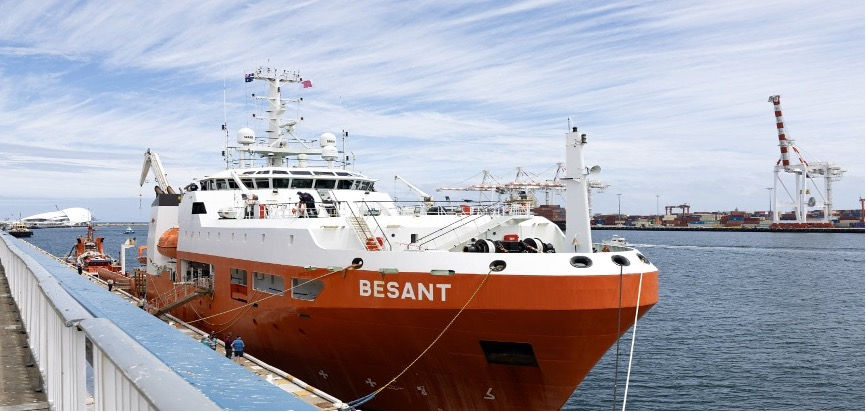
Figure 1 The Saturday Paper - Australia's Inhumane Floating Prisons
Australia’s shift toward deterrence-based asylum policies emerged from a combination of political crises and security narratives in the early 2000s. A sharp increase in boat arrivals between 1999 and 2001, followed by the MV Tampa incident in August 2001, triggered a highly publicized standoff that led directly to the establishment of the first “Pacific Solution” (Marr, D., & Wilkinson, M., 2003; Phillips, J., & Spinks, H., 2013). The securitization of migration after the September 11 attacks further intensified public fears, while the politically charged and later discredited “Children Overboard” claims fueled negative perceptions of asylum seekers (Parliament of Australia, 2002; McDonald, 2005).
These events, combined with electoral incentives favoring “tough” border control and concerns about deaths at sea, entrenched a policy environment in which deterrence — including offshore detention, turnbacks, and restrictive visas — became the dominant response to people seeking asylum (Kaldor Centre for International Refugee Law - UNSW, 2022).
Major Developments Shaping Australia’s Asylum System (2015–2025)
A series of significant policy developments & incidents between 2015 and 2025 shaped Australia’s asylum system and reinforced its deterrence-based framework.
Continuation of offshore detention on Nauru and Manus Island until the closure of the Manus facility in 2017, detainees moved to alternative sites in Papua New Guinea (Phillips, 2017).
Release of The Nauru Files (2016), exposing systemic abuse and neglect (The Guardian, 2016).
Introduction and subsequent repeal of the Medevac legislation (2019–2020) (Refugee Council of Australia, 2020).
COVID-19 exacerbating health vulnerabilities and delaying asylum processing (2020–2022) (UNHCR, 2021).
Declining numbers in offshore detention but continued maintenance of the policy framework (2022–2025) (Kaldor Centre for International Refugee Law - UNSW, 2022; UNHCR, 2021).
Taken together, these developments highlight the ongoing entrenchment of Australia's deterrence-based asylum model, a system that prioritises border control over humane, rights-based protection.
Harmful Practices, Effects & Concerning Statistics of the Issue
1. Offshore Detention Statistics (2015–2025)
Independent investigations consistently identify significant physical, psychological, and social harm in offshore facilities Even after population reductions, conditions remained below international standards.
Indicator (2015–2025) | Number / Statistic | Source |
Total people sent offshore (2013–2024) | ≈3,129 people | Refugee Council of Australia, 2023 |
Peak offshore population | ≈2,450–2,600 people (2015–2016) | Australian Parliamentary Library; UNHCR |
People remaining offshore in 2025 | ≈105 on Nauru; ≈40–64 in PNG | ABC News 2025; RCOA |
Longest time spent in offshore system | 10–12 years for remaining cohort | Kaldor Centre; RCOA |
Mental health crisis rate | 88% diagnosed with depression, anxiety, and/or PTSD (Manus) | UNHCR Health Assessment, 2016 |
Medical transfer delays | 49 critically ill people waited ≥2 years for transfer | ASRC Medical Transfers Report, 2019 |
Deaths in offshore detention | At least 12 deaths by mid-2018 + later deaths linked to offshore neglect | The Guardian & RCOA |
Documented abuse incidents (Nauru Files) | 2,000+ official incident reports | The Guardian, 2016 |
Table 1.0 – Detention Statistics for Harmful Impacts
2. Harm to Children (2015–2018)
The Nauru Files (2016) (The Guardian, 2016) revealed incidents of abuse, mental health crises, and unsafe environments for children detained offshore. These violations starkly contradict the Convention on the Rights of the Child.

Figure 2 Source: The Guardian – 8,000 pages Report leaked by Guardian with 2000+ cases with 50% cases of Children going through sexual abuse, mental trauma and self-harm on Pacific Islands of Nauru
3. Maritime Turnbacks
Under Operation Sovereign Borders, maritime turnbacks continued throughout the decade, limiting access to fair asylum procedures and risking breaches of non-refoulement (UNHCR, 2021).
4. Temporary Protection Visa Regime
TPVs and SHEVs imposed enduring uncertainty, restricting travel, family reunification, and long-term settlement. Studies identify chronic psychological consequences linked to unstable visa status (Silove et al., 2017).
5. Cost of Detention
Public budget data and independent analyses show that offshore detention has consistently cost the Australian Government around or above A$1 billion per year, peaking at up to A$1.49 billion in 2017–18, and still costing A$611 million in 2022–23 and a budgeted A$604.4 million in 2024–25, despite only a small number of refugees being held on Nauru (Kaldor Centre for International Refugee Law - UNSW, 2022; Refugee Council of Australia, 2023). These figures reveal a system that is not only harmful but also extraordinarily expensive (tax payer’s money) compared to community-based alternatives.
6. Australia’s International Share for Refugee Response
Australia accounts for approximately 1.6% of global GDP, it hosts only around 0.2% of the world’s refugees, underscoring a significant gap between its economic capacity and its contribution to global refugee protection (Refugee Council of Australia, 2023).
Metric | Percentage |
Australia’s share of global GDP | ~1.6% |
Australia’s share of global refugees hosted | ~0.2% |
Table 2.0 – Source: Refugee Council of Australia
Below Refugee Response Index (RRI) Australia review was undertaken for the 2021 (COVID-19 pandemic year) year. However, the findings of this review reflect policies that were developed and implemented well before the pandemic and highlight key areas in which Australia’s response to refugees falls short.

Figure 3 Source: Refugee Council of Australia – Refugee Response Index (RRI) Australia
Human Rights Obligations, Violations and Corresponding Legal Provisions
As a party to the core international human rights treaties—including the International Covenant on Civil and Political Rights (ICCPR), the Convention Against Torture (CAT), the Convention on the Rights of the Child (CRC), the International Covenant on Economic, Social and Cultural Rights (ICESCR), and the 1951 Refugee Convention—Australia has binding obligations to ensure the humane treatment, safety, and protection of people seeking asylum.
Documented Violation (2015–2025) | Evidence | Breached Legal Provision |
Prolonged/indefinite offshore detention | Detention lasting 5–12 years for many individuals (RCOA; Kaldor Centre) | ICCPR Art. 9 – prohibits arbitrary detention |
Severe psychological harm | 88% on Manus diagnosed with depression/anxiety/PTSD (UNHCR, 2016) | CAT Arts. 1 & 16 – bans cruel, inhuman, degrading treatment |
Child abuse, self-harm, neglect | 2,000+ incident reports in The Nauru Files (The Guardian, 2016) | CRC Arts. 3, 19 & 24 – child protection, safety, healthcare |
Delayed or denied medical care | Critically ill refugees waiting ≥2 years for medical transfer (ASRC, 2019) | ICESCR Art. 12 – right to the highest attainable standard of health |
Maritime turnbacks risking refoulement | Turnbacks under Operation Sovereign Borders prevent asylum claims (UNHCR, 2021) | Refugee Convention Art. 33(1) – non-refoulement |
Table 3.0 – Human Rights Violations & Legal Breaches
These findings show that the harms documented in offshore detention are not isolated incidents but systemic violations that conflict directly with Australia’s binding international human rights obligations. This alignment highlights fundamental incompatibilities between Australia’s deterrence-based policies and international legal standards.
Discussion & Recommendations
Comparative Global Frameworks for Refugee Protection (2015–2025)
Despite global shifts toward more humane, rights-aligned models, Australia stands as an outlier in 2025.
Framework | Countries (2025) | Key Features | Outcomes |
Deterrence-Based | Australia, UK, Greece, Italy | Offshore detention, turnbacks, temporary visas | Prevent arrivals but cause harm; criticised for rights violations |
Protection-Oriented | Canada, New Zealand | Permanent protection, no offshore processing, strong integration | Best human rights outcomes; high integration success |
Reception & Processing | Germany, Sweden, Netherlands | Onshore processing, legal aid, regulated reception centers | Efficient systems; humane conditions; strained in surges |
Regional Responsibility-Sharing | EU (New Pact), Nordic States | Shared caseload, coordinated processing | Fair distribution; politically complex |
Community Sponsorship | Canada, US, UK | Civil society–led resettlement | Strong community integration; lower state burden |
Table 4.0 – Global Refugee & Asylum Seekers Frameworks
This comparative evidence shows that given the availability of proven alternative models worldwide, Australia’s approach appears both ethically indefensible and strategically unnecessary.
Global GDP Share vs. Refugee Hosting Share by Framework
Framework | Countries (2025) | % of Global GDP (approx.) | % of Global Refugees Hosted (approx.) |
Deterrence-Based | Australia, UK, Greece, Italy | ~5% of global GDP combined | ~1% of global refugees |
Protection-Oriented | Canada, New Zealand | ~2.5% of global GDP | ~0.5% of global refugees (geo-isolation) |
Reception & Processing | Germany, Sweden, Netherlands | ~4.5% of global GDP | ~7–9% of global refugees (Germany is the largest) |
Regional Responsibility-Sharing | EU (New Pact), Nordic States | ~14–15% of global GDP | ~30%+ of global refugees (EU collectively is a major host) |
Community Sponsorship | Canada, US, UK | ~30%+ of global GDP | ~2–3% of global refugees |
Table 5.0 – Global GDP Share vs. Refugee Hosting Share by Framework (Approx. 2025)
Australia’s comparatively small share of the world’s refugees, despite its significant economic capacity, underscores the need for a more proportionate and principled contribution to global protection efforts.
Recommendations (December 2025)
End Offshore Processing by 2026, transitioning to community-based onshore processing to comply with ICCPR Article 9 (freedom from arbitrary detention) and Refugee Convention non-refoulement obligations.
Replace TPVs/SHEVs with Permanent Protection Visas, ensuring stability and family unity in line with CRC Articles 9 and 10 and ICCPR protections for family life.
Establish Independent Oversight for Detention and Maritime Operations, meeting accountability requirements under CAT Articles 2 and 16, which mandate prevention of cruel or degrading treatment.
Expand Humanitarian Pathways, including regional resettlement and community sponsorship, to strengthen burden-sharing consistent with the Refugee Convention’s protection principles and UNHCR’s international cooperation norms.
Reform Turnback Practices, introducing independent risk screening to ensure compliance with Refugee Convention Article 33(1) non-refoulement and ICCPR Article 6 (right to life).
Ensure Comprehensive Healthcare Access, especially mental health care, in accordance with ICESCR Article 12 (right to the highest attainable standard of health).
Invest in Public Education Campaigns to combat xenophobia and misinformation, supporting Australia’s commitments under the CERD (International Convention on the Elimination of All Forms of Racial Discrimination).
Conclusion
Australia now faces a defining policy choice. The past decade has demonstrated that deterrence has delivered neither durability nor dignity, and its continued use carries significant legal, financial, and moral costs. What stands before the state is not a question of capability but of commitment — whether Australia is prepared to align its practices with the standards it has pledged to uphold. The reforms outlined in this report provide a credible, lawful, and humane path forward. It is the responsibility of this Commission, and of the Parliament it advises, to ensure that Australia’s refugee protection system reflects both its legal obligations and its values as a democratic nation. The opportunity for course correction is clear; the imperative to act is undeniable.
Bibliography
Kaldor Centre for International Refugee Law - UNSW. (2022). Australia’s Refugee Policy Timeline. UNSW.
Marr, D., & Wilkinson, M. (2003). Dark victory. Allen & Unwin.
McDonald, M. (2005). Constructing insecurity: Australian security discourse and policy post-9/11. International Relations https://journals.sagepub.com/doi/10.1177/1354066108097553, 19(3), 297–320.
Parliament of Australia. (2002). A Certain Maritime Incident. https://www.aph.gov.au/Parliamentary_Business/Committees/Senate/Former_Committees/maritimeincident/report/index: Parliament of Australia.
Phillips, J. (2017). Boat arrivals and offshore processing: A quick guide.
Phillips, J., & Spinks, H. (2013). Boat arrivals in Australia since 1976. Parliamentary Library Research Paper No. 2, 2013–14. Parliament of Australia https://parlinfo.aph.gov.au.
Refugee Council of Australia. (2020). Medical Evacuation and Offshore Processing. Retrieved from https://www.refugeecouncil.org.au/operation-sovereign-borders-offshore-detention-statistics/
Refugee Council of Australia. (2023). https://www.refugeecouncil.org.au/wp-content/uploads/2022/07/RRI-Australia_FINAL-REPORT.pdf. https://refugeeaction.org.au/?page_id=3447.
Silove et al. (2017). Impact of visa insecurity on mental health, trauma, and settlement prospects of refugees and asylum seekers in Australia. Australian & New Zealand Journal of Psychiatry, 51(4), 322–331.
The Guardian. (2016). The Nauru Files. Retrieved from https://www.theguardian.com/australia-news/2016/aug/10/the-nauru-files-2000-leaked-reports-reveal-scale-of-abuse-of-children-in-australian-offshore-detention
UNHCR. (2021). UNHCR’s Observations on Australia’s Asylum Policies. Retrieved from https://www.unhcr.org/au/news/news-releases/unhcr-statement-8-years-offshore-asylum-policy#:~:text=This%20externalization%20of%20Australia's%20asylum,no%20fault%20of%20their%20own.


Comments